Common language for a SAFE school year - Part 1 - Identity and Belonging
We build agreements with our students. They set goals for themselves. As a school community, we can too.
Recently, I have been thinking a lot about the role of language in building safe communities. It started with discovering the NSPCCWhyLanguageMatters blog and the impact that one word or expression can have on a person's sense of self, sense of belonging, sense of safety; language is more than words - it is power, culture, history and perspective, identity and belonging. And yet, language use often feels like a side note, safe expression as a given. As educators, we often begin each new school year by building class agreements for a safe and collaborative class community. Students set individual goals for their own roles in making it happen. Within that, we often see expectations around safe language use. As educators, we can model the same. We too can begin the year by creating shared agreements and setting an individual goal around language use that promotes a safe community for adults and students alike.
Growing up I understood the purpose of the saying “Sticks and stones may break my bones but words will never hurt me”. It was meant to be a shield to protect me from the potential harm of harsh and hurtful words, a reminder to simply let words go in one ear and out the other.
However, it’s not really quite that simple is it? Words may not break bones, but words can break a person in so many deeper and unseen ways. Words Hurt, a short anti-bullying commercial produced and released by Concerned Children’s Advertisers of Canada (ccacanada) in 2003, still resonates. Intentionality doesn’t matter; a label thrown out in frustration, a generalisation, perhaps overheard, might create an unjust impression, mask something deeper, spread distrust and hurt. The language of adultification, seeing a child as more mature, responsible and self-sufficient than their age, and victim blaming shift responsibility onto those harmed and lessen experiences. No matter what, words and language have weight - leaving invisible and, potentially, long lasting marks. Ignoring the impact of the words carries the risk of leaving a person feeling powerless, unsafe and, in the words of a close friend, invalidated.
Living and working internationally for over 30 years now, I have learned the value of self-reflection in using language mindfully. Within an international school, each person brings a unique set of histories, experiences, perspectives and so it’s impossible to get it right all the time. But being open, curious, reflective can go a long way in avoiding situations that can leave others feeling unheard, invalidated, powerless, unsafe. Recognising the difference between funny cross-cultural mix-ups, like the country specific meanings of the words 'pants' and 'suspenders’, versus an innocent slang term in one country being deeply offensive in another, helps create a community of understanding, respect and safety. Unsure about a name, a pronunciation or preference, person or identity first, just ask.
Now is the perfect time to start. Put a spotlight on language and its role; take time to question, reflect and commit to shared agreements around language use for a safe learning community.
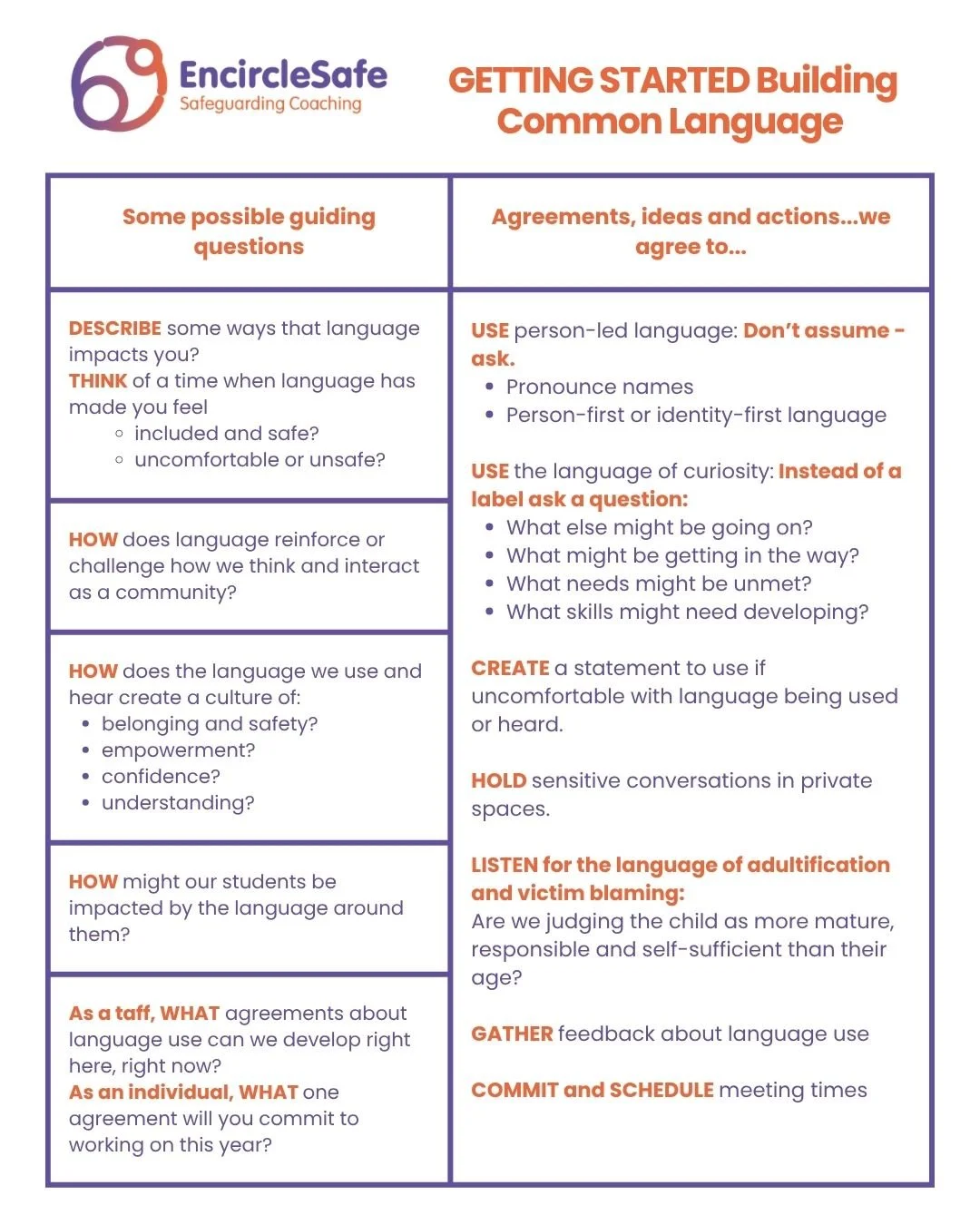
To help get the conversation started, the table below includes some possible guiding questions and sample agreement points that might come up.
For more information about topics explored in this blog - Related readings and references:
NSPCC blog - Why Language Matters blog series (video or text)
CPOMS - Why Language Matters in Safeguarding
ListenUp - Pushing Forward – Testing learning on Adultification in Child Safeguarding Practices in England
KULeuven - Challenge 3: The complex relations between language and power in society
UKCouncil for Internet Safety (UKCIS) - Challenging Victim Blaming Language and Behaviours
Nederlans Jeug Institut (NJI) - What is victim blaming and how do I deal with it?